
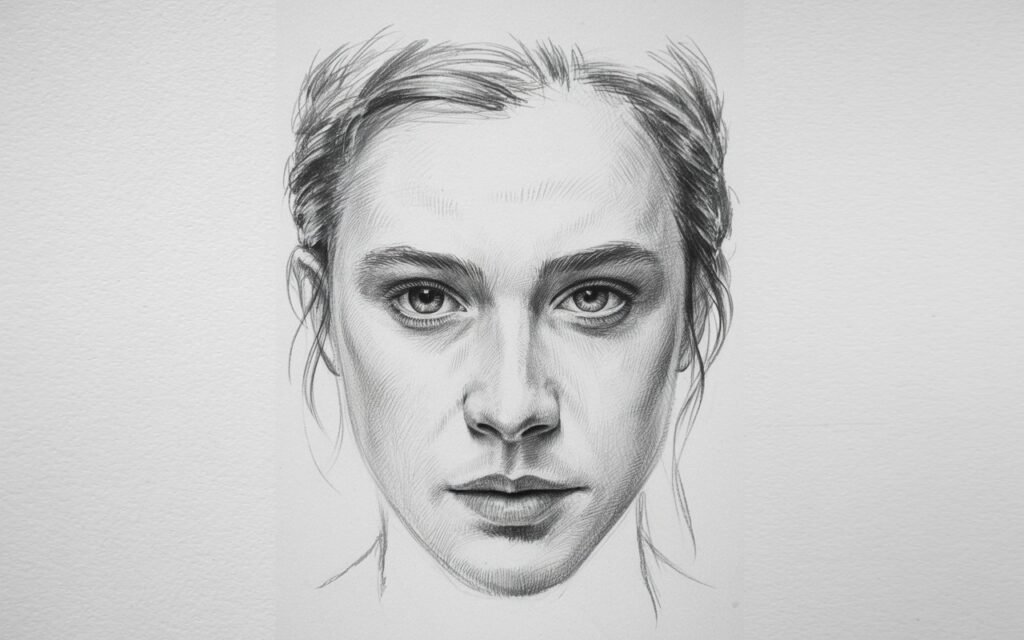

Introduction: The Pain of “It Was Perfect… Until I Touched It”
You finally did it. The sketch looks good. The proportions are correct. The face has emotion. The hands don’t look like claws. The shading is smooth. You’re proud… and then you decide to “just fix one last thing.” Five minutes later, the drawing looks messy, overworked, and somehow worse than before.
If this happens to you often, don’t worry—you’re not untalented. This is one of the most common problems artists face. The final step is where many drawings get ruined because it’s when we become hyper-aware of tiny imperfections. We lose control, rush, or overcorrect details that didn’t need changes.
In this article, you’ll learn simple ways to protect your artwork, finish with confidence, and avoid destroying your drawing at the very last moment.
Why Do We Ruin Drawings in the Final Step?
Before fixing the problem, it helps to understand why it happens.
1) You Start Seeing Only Problems
When you stare at your artwork for too long, your brain switches from enjoying the whole drawing to hunting for errors. Suddenly you see “wrong” lines everywhere—even when the drawing looks fine.
2) You Feel Pressure to Make It Perfect
The closer you get to finishing, the more pressure you feel. You might think:
- “This is my best drawing so far.”
- “I can’t mess it up now.”
And that fear causes rushed decisions.
3) You Overwork Areas That Were Already Successful
Often you “ruin” the best part by adding unnecessary lines, too much shading, or heavy outlines that flatten the drawing.
The #1 Rule: Stop Editing and Start Protecting
The last stage of a drawing isn’t about improving everything. It’s about protecting what’s already working.
A quick mindset shift:
Instead of asking:
“How can I make this drawing better?”
Ask:
“What is already good here, and how do I keep it safe?”
This one question can change your results immediately.
Use a “Final Step Checklist” Before You Touch Anything
When artists ruin their work, it’s usually because they jump into fixing without a plan.
Here’s a simple checklist to pause your hand:
✅ Does the drawing look finished from far away?
✅ Are the major shapes correct?
✅ Is the lighting consistent?
✅ Do I really need to change anything?
✅ If I change this, can I undo it?
If you can’t answer clearly, take a break first.
Step Away: The Most Powerful Final Trick
This sounds too simple, but it works like magic.
Take a break for:
- 5 minutes if you’re in a flow
- 30 minutes if you’re tired
- 1 day if you’re emotionally attached to the drawing
When you return, your brain resets and you will see the drawing more objectively. Most artists realize they didn’t need to “fix” much at all.
Work Light at the End (Not Dark)
One of the biggest final-step disasters is making everything too dark.
Why it ruins your drawing:
- Dark lines can’t be erased cleanly
- Heavy shading makes your drawing muddy
- Bold outlines can kill realism
- The drawing loses softness and depth
Better strategy:
In the last step, do only light adjustments:
- soften edges
- add tiny highlights
- clean messy lines
- refine small textures
Think of it like adding seasoning to food—not dumping the whole spice jar.
Don’t Outline Everything (Use Selective Line Weight)
Many drawings look great until the artist outlines every single edge.
What happens?
- The drawing becomes flat
- It looks like a cartoon (even if you wanted realism)
- You lose depth and focus
The fix: Selective line weight
Use thicker lines only for:
- the shadow side
- closest objects
- focal areas (eyes, face, important details)
Use lighter lines for:
- far objects
- soft edges
- areas in light
Save Your Drawing With Layers (Even on Paper!)
Digital artists have layers, but traditional artists can do something similar.
Traditional “layers” methods:
- Use tracing paper to test final lines
- Try shading ideas on a separate scrap paper
- Do final dark details with a different pencil slowly
- Photograph your drawing before the final step
Quick protection hack:
Take a photo of your drawing before you finish.
This helps you compare and prevents you from going too far.
The “One Change Only” Rule
If you have a habit of ruining drawings, try this:
Final step rule:
You are allowed only ONE big change per session.
That means you can:
✅ fix one eye
✅ adjust one shadow
✅ refine one hand
✅ clean one edge
But NOT everything at once.
This stops you from spiraling into endless edits.
Fix Mistakes Without Panic (Small Corrections)
Sometimes you truly need to fix something, but you panic and make it worse.
3 safe ways to correct:
1) Erase Softly, Not Aggressively
Use a kneaded eraser and tap gently. Don’t rub hard—rubbing damages paper and creates dirt.
2) Fade First, Redraw Later
If a line is wrong, fade it lightly first. Then redraw slowly with a lighter pencil.
3) Blend Less Than You Want
Over-blending is a common final-step killer. Blending can make the drawing look smudged and lose texture.
How to Know When to Stop
Many artists ruin drawings because they don’t recognize the “finish line.”
Signs your drawing is finished:
✅ you can’t find any big shape mistakes
✅ details are balanced (not all equally sharp)
✅ the main focal point stands out
✅ you’re only changing tiny things repeatedly
✅ you feel nervous to touch it
That nervous feeling is important—it often means the drawing is complete.
Use the “Mirror Test” to Catch Final Mistakes
This is a professional trick that works for both digital and traditional art.
Mirror test options:
- Flip your canvas digitally
- Look at your drawing in a mirror
- Take a photo and flip it horizontally
This instantly shows:
- uneven eyes
- tilted faces
- wrong proportions
- awkward symmetry
Fix only what is obvious, not what is “maybe.”
Build a Strong Finishing Routine (Like a Pro)
Your final step should be a routine, not chaos.
A simple finishing routine:
- Clean smudges and messy lines
- Strengthen only the darkest darks (small areas)
- Add highlights (eraser or white gel pen if allowed)
- Add final texture details (hair strands, fabric, pores)
- Stop. Sign. Photograph.
Your signature is a mental signal that it’s done.
Conclusion: Your Drawing Doesn’t Need More… It Needs Control
Ruining your drawing in the final step isn’t about skill—it’s about control, confidence, and decision-making. Most of the time, your artwork looks better than you think. Your brain simply wants to keep “fixing” because perfection feels safe.
But art doesn’t need perfect.
It needs finished.
So next time you reach the final step, remember:
✅ pause
✅ step back
✅ make small edits
✅ protect what you already did right
✅ stop before you overwork it
The goal is not to keep drawing forever.
The goal is to finish strong.