
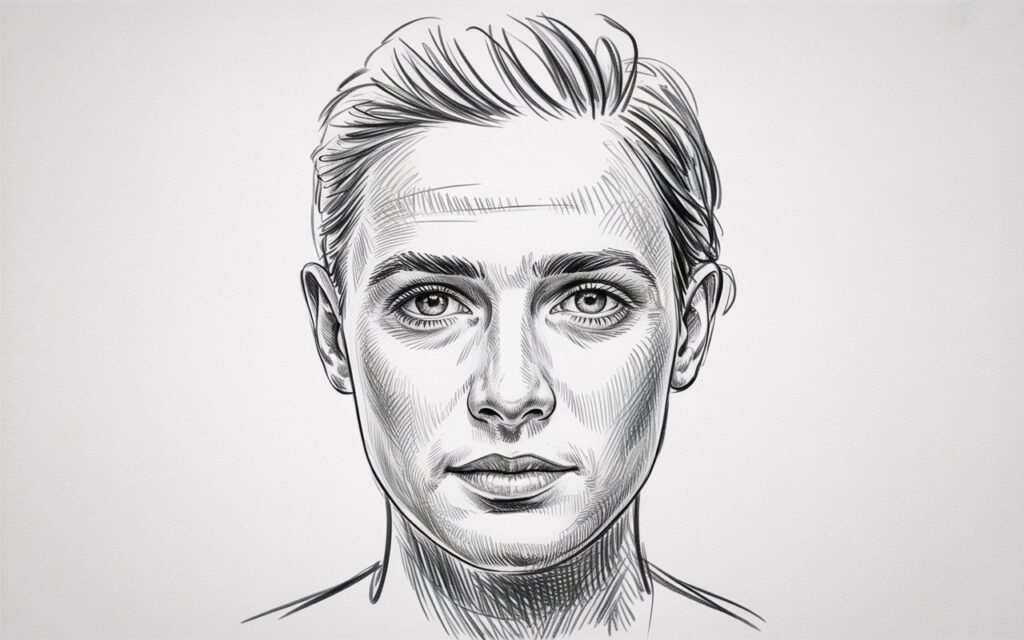

Drawing clean lines is one of the biggest challenges for beginners—and even experienced artists sometimes struggle with it. You sit down, start sketching, and suddenly your lines look scratchy, uneven, or shaky. It can feel frustrating because the idea in your head looks perfect, but the line on paper doesn’t match it.
The good news is this: shaky lines are not “talent problems.” They are control problems, and control is something you can build with simple habits and practice. Clean lines are not about drawing slowly and carefully every time. Clean lines come from confidence, muscle memory, and smart technique.
In this article, you’ll learn why shaky lines happen and how to fix them using easy exercises and practical methods that instantly improve your line quality.
Why Do Your Lines Look Shaky?
Before you fix shaky lines, you need to understand what causes them. Most of the time it’s one of these reasons:
You’re drawing too slowly
Many people think slow lines are cleaner, but slow movement can actually create wobble. When your hand moves too slowly, your brain tries to “correct” the line every millimeter, which makes it shaky.
Clean lines need smooth motion, not over-thinking.
You’re using only your fingers
If you draw with finger movement only, your line becomes short and nervous. Fingers are good for small details, but not for long smooth strokes.
Your grip is too tight
When you hold your pencil like you’re trying to break it, your hand becomes tense. Tension causes shaky movement.
You’re afraid to make mistakes
This is a big one. When you fear mistakes, you start drawing tiny broken “hairy lines” instead of one clear stroke.
The Best Way to Hold Your Pencil for Clean Lines
Your grip affects line quality more than you think. If you always use the writing grip (very close to the tip), your lines may look stiff.
Try the “relaxed grip” method
- Hold the pencil slightly farther from the tip
- Keep your wrist relaxed
- Let your hand glide, not press
This is perfect for sketching, long lines, and smooth curves.
Use the writing grip only for details
Once your sketch looks good, then switch to a tighter grip for small areas like eyelashes, tiny texture, or sharp edges.
Use Your Arm, Not Just Your Fingers
One of the fastest ways to stop shaky lines is to change which part of your body you draw from.
Finger movement (small range)
✅ Best for: tiny shapes, small details
❌ Bad for: long lines and big curves
Wrist movement (medium range)
✅ Best for: medium curves and small objects
❌ Bad for: long straight strokes
Elbow and shoulder movement (large range)
✅ Best for: long straight lines, confident sketching, large curves
✅ Best for: clean drawing style
A great artist secret is this: clean line art often comes from shoulder movement, not fingers.
Try drawing a long line while keeping your wrist stiff and moving your arm from the elbow. You’ll immediately see smoother results.
The 5-Minute Daily Exercises That Fix Shaky Lines
You don’t need hours of practice. You only need a short daily routine that builds line control and confidence.
Exercise 1: Ghosting Lines (Best exercise ever)
This is the most important technique.
How to do it:
- Choose two points on paper
- Hover your pencil above the page
- “Practice” the stroke in the air 3 times
- Then draw it once, confidently
This trains your brain to make one smooth movement instead of many corrections.
✅ Do 10–20 ghosted lines daily.
Exercise 2: Straight Line Repetition
Draw rows of straight lines across the paper:
- horizontal
- vertical
- diagonal
Don’t worry about perfection—focus on smoothness.
✅ Goal: 80% smooth, even if it misses the target slightly.
Exercise 3: Curves and S-Curves
Clean curves are harder than straight lines. Practice:
- C curves
- reverse C curves
- S curves (like flowing ribbon)
Curves teach your hand rhythm and balance.
✅ Do 2 pages per week.
Exercise 4: Circles and Ellipses
Most shaky lines appear when drawing circles because we try to correct the shape too much.
Practice:
- small circles
- medium circles
- ellipses tilted left/right
✅ Draw fast, not slow.
Exercise 5: One-Line Shapes
Draw shapes without lifting your pencil:
- box
- leaf
- simple face outline
- cat silhouette
This forces confidence and smooth flow.
Fix Your Line Confidence (The Secret to Clean Drawing)
Many shaky lines come from one issue: lack of confidence. Confidence isn’t a personality trait—it’s practice and decision-making.
Stop “chicken scratching”
Chicken scratching means drawing with tiny broken strokes like you’re afraid to commit.
Instead, try this rule:
✅ One stroke per line
Even if it’s not perfect, it will look cleaner than 20 small strokes.
Let mistakes happen
Every artist has messy sketches. The difference is they don’t panic. They build the drawing in layers.
Sketch lightly first → correct shapes → finalize darker.
Use Light Pressure First, Dark Pressure Last
If you press hard from the beginning, you can’t correct lines easily. The cleanest drawings are built like this:
Step 1: Light sketch (2H / H / HB)
- soft pressure
- simple shapes
- loose lines
Step 2: Refine the structure
- adjust proportions
- correct angles
- smooth curves
Step 3: Final line (HB / 2B / 4B)
- confident stroke
- darker pressure
- clean edge
This method keeps your drawing clean and professional.
Improve Your Lines Instantly With These Tools
You don’t need expensive materials, but the right tools help.
Use smoother paper
Rough paper creates texture that can make lines look shaky. Try:
- sketchbook paper (smooth)
- Bristol paper (very smooth)
- mixed media paper (medium smooth)
Use a sharpened pencil
A blunt pencil can cause messy line edges. For clean lines:
- sharpen often
- rotate the pencil as you draw
Use the right eraser
- Kneaded eraser: best for lifting graphite softly
- Plastic eraser: strong, clean erasing for final work
Erase gently to avoid damaging paper fibers.
How to Stay Steady While Drawing (Body Tips)
Sometimes shaky lines come from posture, not skill.
Sit correctly
- Keep your paper at a comfortable angle
- Relax your shoulders
- Don’t squeeze your pencil
Move your paper, not your hand
Rotate your paper so your hand can draw naturally.
Many artists do this all the time—it’s not cheating, it’s smart.
Breathe while drawing
It sounds simple, but holding your breath makes your hand stiff. Try this:
- inhale before a long line
- exhale while you draw
Smooth breathing = smooth lines.
Final Practice Plan (7 Days to Cleaner Lines)
Here is a simple plan that works fast:
Day 1–2: Straight lines + ghosting
10 minutes daily
Focus on speed + smoothness
Day 3–4: Curves + circles
10 minutes daily
Focus on flow
Day 5: One-line shapes
10 minutes
Draw simple objects
Day 6: Sketch a small object
Use light sketch → refine → final clean line
Day 7: Redraw the same object again
Compare results—you will see improvement.
✅ Conclusion: Clean Lines Come From Confidence + Control
Clean pencil lines don’t require perfect hands. They require good technique, relaxed movement, and smart practice.
If you remember one thing, make it this:
✅ Ghost your line, then draw it once with confidence.
With only a few minutes a day, your shaky lines will become smoother, your drawings will look more professional, and most importantly—you’ll enjoy drawing more.