
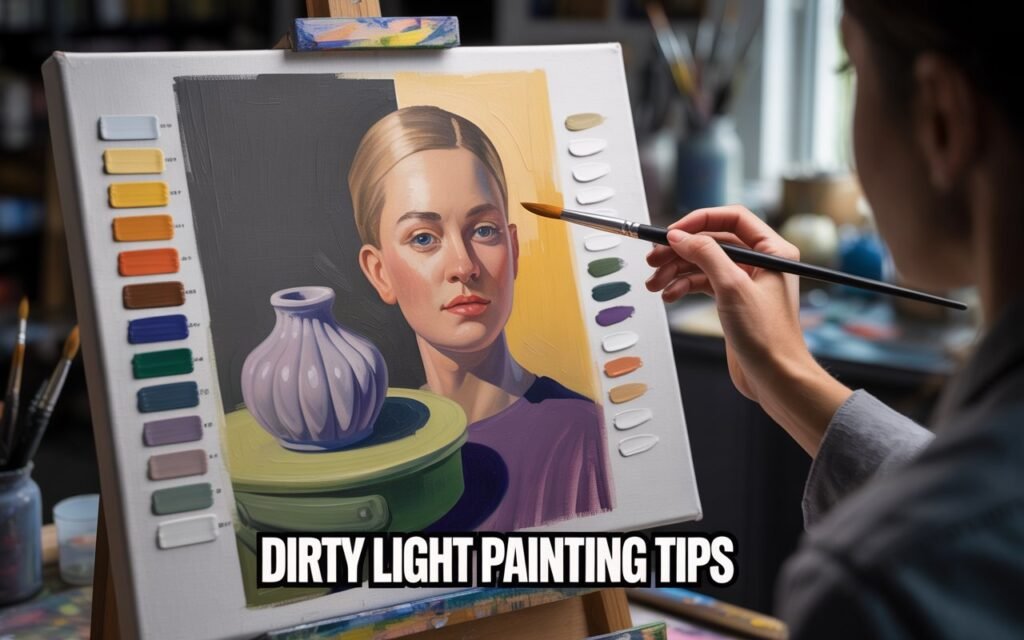

Painting “dirty light” is one of the most beautiful effects you can add to your artwork. It creates mood, atmosphere, and emotion—especially in scenes like dusty sunsets, smoky streets, foggy mornings, or rainy city lights. That soft golden haze can instantly make a painting feel cinematic.
But there’s a common problem many artists face:
👉 The more they try to create that dirty light effect… the more the colors start looking muddy, dull, and lifeless.
So how do professional artists paint that warm, dusty atmosphere while still keeping the colors clean and readable?
In this guide, you’ll learn how to paint dirty light step-by-step, using clear rules you can apply in digital art or traditional painting.
What Is “Dirty Light” in Painting?
Dirty light is not a “bad” type of light—it’s simply light that travels through particles in the air.
These particles can be:
- Dust
- Fog
- Smoke
- Pollution
- Mist
- Rain humidity
Because the light gets scattered, it looks:
✅ softer
✅ less sharp
✅ more diffused
✅ slightly desaturated
✅ often warm or yellow/orange
You usually see dirty light in:
- Sunset scenes
- Old streets and industrial areas
- Forests with haze
- Fire-lit environments
- Desert landscapes
- Stormy and moody skies
Dirty light often creates that dreamy “film look” artists love.
Why Dirty Light Easily Turns Into Muddy Color
Before fixing muddy color, you need to know what causes it.
The #1 Reason: Overmixing Complements
Muddy colors happen when you mix too many opposite colors together.
Examples of complementary colors:
- orange + blue
- red + green
- yellow + purple
Dirty light often needs warm + cool, so if you blend them too much, the result becomes gray-brown and dead.
✅ Warm light + cool shadows = beautiful
❌ Warm light + cool shadows mixed too much = mud
The #2 Reason: Too Many Dark Layers
Dirty light scenes are often low contrast and moody, so artists sometimes keep adding dark tones.
But if you darken your painting using heavy black or over-blending, everything loses color.
The #3 Reason: Using Gray Too Early
A little gray is helpful. Too much gray early makes your painting look like a dirty wall.
The Golden Rule: “Dirty Light is Soft, Not Dirty Paint”
This is the mindset shift that changes everything.
Dirty light should look like:
✅ dust in the air
✅ warm haze
✅ soft atmosphere
Not like:
❌ paint mixed randomly until it turns brown
The goal is to paint the feeling of dusty light, while keeping your color choices intentional.
Step-by-Step Method to Paint Dirty Light Cleanly
Let’s break it into an easy workflow.
Step 1 — Start With Big Values, Not Details
Before adding dirty light, block in your scene using simple value shapes:
- light area (sky / sun glow)
- midtones (buildings, ground)
- dark shapes (foreground silhouettes)
If your value structure is clear, the dirty light effect will sit on top beautifully.
✅ Tip: Squint your eyes at your reference or canvas.
If you can still read the scene, your values are good.
Step 2 — Choose a Dominant Temperature
Dirty light works best when you choose ONE dominant color temperature:
- Warm dirty light → yellow / orange / red glow
- Cool dirty light → foggy gray-blue light
Most “dirty light” paintings have a warm dominant light source and cooler shadows.
Decide early:
Is the scene warm haze or cold mist?
This keeps your palette controlled.
Step 3 — Keep Your Shadows Cooler (But Not Too Saturated)
To create that dusty glow, the common trick is:
✅ warm light + cool shadows
But the cool shadows should be:
- slightly muted
- not super bright blue
- not overly purple
Good cool shadow colors include:
- blue-gray
- muted teal
- desaturated violet
- green-gray
This creates contrast without screaming.
Step 4 — Use Layering Instead of Overmixing
The cleanest dirty light effect comes from layering, not mixing everything on one brushstroke.
For Traditional Painting:
Use glazing techniques:
- thin warm glaze over the light area
- soft transitions
- keep the underpainting clean
For Digital Painting:
Use blend modes like:
- Overlay
- Soft Light
- Color Dodge (subtle!)
- Multiply for shadows
- Normal for final control
✅ Pro Tip: Instead of blending warm + cool together, paint them separately and soften the edge gently.
The “Two-Brush Trick” to Avoid Mud
This is a powerful technique:
Brush 1 — Color Brush
Use this brush for placing color confidently.
- warm light strokes
- cool shadow strokes
- midtone shapes
Brush 2 — Soft Blender (Minimal Use)
Use this only to soften transitions slightly.
✅ Do not blend everything into soup.
Blending should support the form—not erase it.
If you keep blending nonstop, you destroy color separation.
How to Make Dirty Light Glow Without Losing Color
Add a Warm Atmospheric Veil
Dirty light is often a thin foggy layer in the air.
To paint it:
- create a new layer (or glaze)
- choose a warm color (yellow-orange)
- apply it gently over the mid-distance
This creates depth instantly.
✅ Foreground stays sharper
✅ Background becomes lighter and softer
That’s atmosphere.
Make Highlights Warmer, Not Whiter
Many artists make highlights too white and clean.
But dirty light highlights should feel:
- warm
- dusty
- slightly golden
Instead of pure white, try:
- warm cream
- pale yellow
- soft orange-peach
This gives you glow without looking like plastic.
The Secret Ingredient: Controlled “Muddy Neutrals”
Here’s the truth:
Dirty light DOES include neutral tones.
But the difference is:
✅ controlled neutrals look cinematic
❌ uncontrolled neutrals look like mistakes
How to Control Neutrals
Use neutrals mainly in:
- background haze
- far buildings
- soft clouds
- low-contrast areas
And keep the focal point cleaner.
A great rule:
Use dirty neutrals for atmosphere, but keep your main subject color readable.
Quick Palette Examples for Dirty Light
Here are simple palette ideas you can use:
Warm Dusty Sunset Palette
- warm yellow-orange light
- muted red-brown midtones
- cool blue-gray shadows
- soft warm highlights
Foggy City Dirty Light Palette
- gray-orange sky glow
- soft beige walls
- blue-green muted shadows
- warm window lights
Smoky Firelight Palette
- deep orange light source
- warm brown midtones
- dark cool shadows (blue-black)
- glowing warm edges
Common Mistakes to Avoid
Mistake 1 — Adding Black to Darken Everything
Black kills color quickly.
Instead:
- darken with cool tones
- use darker versions of your colors
Mistake 2 — Overusing Gray Everywhere
Gray is good in the distance, not everywhere.
Mistake 3 — Using 10 Colors When You Only Need 4
Dirty light is best when your palette is limited.
Final Tips for a Professional Dirty Light Look
Here are the finishing touches that make the effect believable:
1-Soften Background Edges
Dirty light blurs distance naturally.
2-Keep Foreground Contrast Higher
Even if the scene is moody, your foreground needs clarity.
3-Add Small Sharp Accents
One sharp edge or bright highlight can bring life back.
Example:
- sparkle on a car window
- sun edge on a roof
- light hitting a face
This prevents the painting from looking flat.
Conclusion: Dirty Light Should Feel Alive, Not Muddy
Painting dirty light is an advanced but rewarding skill.
When done right, it makes your art feel emotional, realistic, and cinematic.
The key is:
✅ choose a dominant temperature
✅ separate warm and cool instead of blending endlessly
✅ layer colors softly
✅ control neutrals carefully
✅ keep your focal area clean
Once you master this technique, your artwork will instantly look more professional and atmospheric.